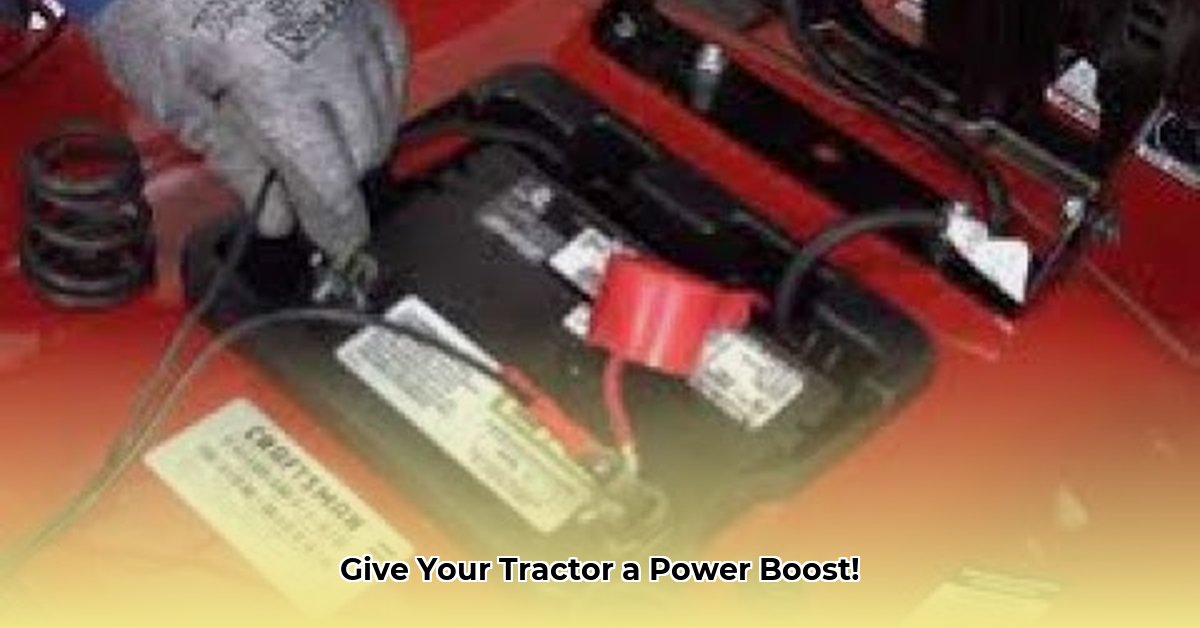
Craftsman Garden Tractor Batteries: AGM Technology Explained
Keeping your farm equipment running smoothly relies heavily on reliable power, and the battery is often the unsung hero. This article examines agricultural equipment batteries, focusing on Craftsman AGM batteries for smaller machines like riding mowers. We'll explore AGM technology, compare it to other battery types, and guide you in selecting the right battery for your needs. While showcasing Craftsman AGM batteries, we'll acknowledge the limitations of current data and the need for broader research into batteries for larger farm equipment. For information on replacing belts on your Craftsman equipment, check out this helpful guide: Craftsman Belt Replacement.
Understanding Absorbent Glass Mat (AGM) Battery Technology
Absorbent Glass Mat (AGM) batteries represent an advancement over traditional flooded lead-acid batteries. The key difference lies in the electrolyte, which is absorbed into a glass mat separator within the battery. This key design feature eliminates the need for frequent maintenance like adding water—a significant time-saver for busy farmers. AGM batteries also offer improved cold-weather performance and superior resistance to vibration, crucial for the demanding conditions on a farm. These benefits translate to reduced downtime and maintenance costs, ensuring your equipment is ready when you are. Is choosing the right battery a key to increased profitability? Absolutely!
Craftsman AGM Battery Performance and Limitations
Craftsman offers AGM batteries suitable for smaller equipment like riding lawnmowers. These batteries provide reliable starting power and consistent energy. However, it's crucial to understand their limitations. Currently, available data primarily focuses on smaller applications. More extensive research is required to fully assess their performance in larger tractors or under extreme operating conditions. Therefore, while suitable for certain tasks, they might not be ideal for all agricultural applications. Have you considered the impact of battery type on your operational efficiency? This is an important question.
AGM vs. Other Battery Types: A Comparative Analysis
AGM batteries generally outperform standard lead-acid batteries in several key aspects. They are maintenance-free, exhibit better cold-weather performance, and are more resistant to vibration. However, they typically have a higher initial cost. Lithium-ion batteries show promise, offering higher energy density and potentially longer lifespans. However, comprehensive data on their long-term reliability and performance in demanding agricultural environments is lacking. More research is urgently needed to fully evaluate their suitability for various agricultural applications. This is a crucial area for future advancements.
| Battery Type | Advantages | Disadvantages | Ideal Applications |
|---|---|---|---|
| AGM | Maintenance-free, durable, excellent cold-weather performance | Higher upfront cost, may not be optimal for high-demand applications | Smaller equipment, average-use conditions |
| Lead-Acid | Lower initial cost | Requires regular maintenance, poor cold-weather performance | Smaller equipment, occasional use, budget-conscious situations |
| Lithium-ion | Lightweight, high energy density, potentially long lifespan | Significantly higher cost, limited long-term data available | Promising future technology; further research needed for widespread adoption |
Choosing the Right Battery for Your Needs: A Step-by-Step Guide
Selecting the appropriate battery for your equipment involves careful consideration of several factors. Follow these steps:
- Consult Your Owner's Manual: Always refer to the manufacturer's specifications for recommended battery type, size, and amperage. This is the most critical step to avoid damage and ensure optimal performance.
- Assess Equipment Size and Usage: Larger tractors with higher electrical demands might benefit more from AGM or even lithium-ion batteries. Smaller equipment or less frequent use might accommodate a lead-acid battery.
- Consider Operating Conditions: Extreme temperatures, regular vibration, and continuous use will impact battery lifespan. AGM's durability makes them a better choice in harsh conditions.
- Evaluate Your Budget: While AGM and lithium-ion batteries offer long-term cost savings due to reduced maintenance and potentially longer life, they represent a higher initial investment.
Future Trends and Research Needs in Agricultural Battery Technology
While AGM batteries represent a significant improvement, the potential of lithium-ion batteries in agriculture remains largely untapped. Their lightweight design and superior energy density could revolutionize farm equipment. However, further research is crucial to address concerns about long-term performance, deep-discharge cycling, peak current capabilities in demanding applications, and overall cost-effectiveness. This research will be critical for wider adoption of this promising technology.
Conclusion: Powering the Future of Farming
Choosing the right battery for your agricultural equipment is essential for operational efficiency and cost-effectiveness. AGM batteries currently offer a robust solution for many applications, particularly smaller equipment. However, continued research and development are critical to unlocking the full potential of emerging technologies like lithium-ion, paving the way for even more efficient and reliable power solutions for the future of agriculture.